The Netherlands Research School of Gender Studies organises the DOING GENDER Lecture Series in cooperation with her partners. These lectures stress the importance of doing gender work combined with an active involvement in the practice of gender theory and research. The concept of DOING GENDER supports a hands-on approach to gender issues in the sense of social and political engagement with the new forms of gender inequalities that are taking shape in the world today. The lecture series wants to give space to the new generations of gender theorists and practitioners and to perspectives that innovate the field and do gender in new ways. Key is the notion of doing gender: what is the state of the art definition of gender? How do contemporary scholars and activists utilise this definition?
On Thursday November 12, 2026, Gerard Koskovich will give a Doing Gender Lecture entitled Sex Reform in the Age of Mechanical Reproduction: Visual Strategies in the Work of Magnus Hirschfeld.
This lecture is jointly organized by Leiden University and the NOG.
Lecture: Sex Reform in the Age of Mechanical Reproduction: Visual Strategies in the Work of Magnus Hirschfeld
At the turn of the nineteenth century, Magnus Hirschfeld was one of the first sexologists who made use of images in his work. Beyond conventional medical illustrations, the images reached a broader audience and constituted a popular public for sexology. His lifelong obsessive gathering and reproduction of visual documentation—an activity far surpassing that of any of his contemporaries—prompts us to ask about his vision of what we might now call queer and trans futurity.
This lecture traces Hirschfeld’s development of visual rhetorics to portray variations of sexuality and gender. Doing so enables us to study these images as a complicated precursor of what we would now identify as representations of LGBTQI+ people and cultures. Magnus Hirschfeld’s use of reproduced images in his publications from the 1890s to the 1930s positioned him as one of the first sexologists to make images other than conventional medical illustrations a central feature of his work. He also was one of the first to use this practice to reach beyond professional audiences to constitute a popular public for sexology. Tracing Hirschfeld’s development of visual rhetorics to portray variations of sexuality and gender enables us to interrogate a significant historical genealogy offering complicated precursors to what we would now identify as representations of LGBTQI+ people and cultures.
Hirschfeld’s visual imaginary provides material for discerning scientific claims that are both forceful and problematic and for examining how he used images to make polemical arguments on behalf of social respect and legal recognition for queer and trans people. Hirschfeld’s iterative elaboration across four decades of connections and contrasts present in this vast body of material sparks numerous questions about the meanings of the bricolage he created and recreated.
Biography
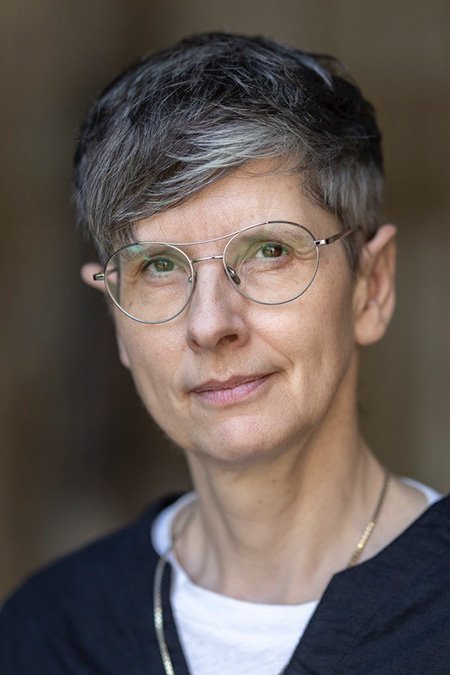
 Gerard Koskovich is an independent historian and a founding member of the GLBT Historical Society Museum & Archives in San Francisco. He has been active in the movement to create LGBTQ+ archives and museums. As a public historian, Koskovich has focused in part on LGBTQ+ place-based history and intangible cultural heritage. Most recently Koskovich has focused on the history of the Castro District in San Francisco; the life and work of Dr. Magnus Hirschfeld (1868–1935), a pioneering advocate for homosexual and transgender emancipation; on the history of queer history as a cultural practice in the United States; and on LGBTQ place-based history, preservation and intangible cultural heritage.
Doing Gender Lecture by Gerard Koskovich
Thursday November 12, 2026
Date & Time: November 12, 2026, 15:00 – 17:00 hrs
Location: Leiden – Lipsius room 0.05 (Cleveringaplaats 1)
Registration: Please send an email to nog@uu.nl, using the subject line ‘registration Doing Gender Lecture Koskovich’. For registration, we need your name, study programme, and the research school you’re affiliated with (this applies to RMA and PhD).
ECTS: 1 ECTS, only for PhD and RMA Students.
NB: Students receive 1 ECTS when doing the preparatory reading and writing a brief preparatory assignment.
The lecture is open to everyone. RMA and PhD Students can be awarded 1 ECTS
Attendees should read the assigned readings (links below) beforehand and be prepared to engage in discussion:
- Katie Sutton. “Sexology’s Photographic Turn: Visualizing Trans Identity in Interwar Germany,” Journal of the History of Sexuality 27, no. 3 (September 2018): pp. 442–479.
- Robert Beachy. Gay Berlin: Birthplace of a Modern Identity (New York City: Vintage Books, 2014): chapter 6, “Weimar Sexual Reform and the Institute for Sexual Science.”