Masterclass with Dr. Anna Younes
De/Colonial Education as a Social Practice
November 16, 2026 14:00 – 17:00 hrs
Utrecht University
“Education in Europe was dominated by the capitalist class. The same class bias was automatically transferred to Africa and, to make matters worse, the racism and cultural boastfulness harbored by capitalism were also included in the package of colonial education. Colonial schooling was education for subordination, exploitation, the creation of mental confusion, and the development of underdevelopment. […] It is a presentation of what the colonial educational system achieved
in terms of what it set itself to achieve.”
Walter Rodney, How Europe Underdeveloped Africa (1972, Verso)
This workshop convenes to examine the structural and discursive mechanisms through which the Western university reproduces epistemic hierarchies.
We will juxtapose Walter Rodney’s seminal critique of education as an instrument of underdevelopment (How Europe Underdeveloped Africa, Chapter 6) with Richard Delgado’s intervention on the “Imperial Scholar” in civil rights literature. These texts will be read alongside contemporary analyses of the “Diversity Paradox” in higher education and Sara Ahmed’s theorization of citation as a reproductive technology (“I would describe citation as a rather successful reproductive technology, a way of reproducing the world around certain bodies“).
Together, these readings invite us to interrogate whether i.e. an increased demographic diversity within academia necessarily translates to substantive shifts in the production of knowledge. By reading Rodney’s materialist critique alongside Delgado’s indictment of white gatekeeping and Ahmed’s attention to citation practices, we ask: What do these texts reveal about the function of the university as an institution? How do regimes of citation and hiring operate to sustain or disrupt colonial continuities within the academy?
Participants will be guided to explore the following questions:
- In what ways does the contemporary university perpetuate the pedagogical architectures described by Rodney?
- How do citation practices in the Social Sciences and Humanities function as technologies of inclusion and exclusion?
- How do these dynamics manifest specifically within the Dutch higher education landscape, particularly regarding scholarship on Palestine, race (or gender, sexuality, disability), and coloniality?
- To what extent does institutional diversity rhetoric mask enduring exclusions in hiring, curriculum, and research validation?
Required Readings
Attendance is contingent upon prior engagement with the following texts:
- Rodney, W. (2018). How Europe underdeveloped Africa (Chapter 6, “Education for Underdevelopment” and “Development by Contradiction”). Verso.
- Delgado, Richard. “The Imperial Scholar: Reflections on a Review of Civil Rights Literature.” University of Pennsylvania Law Review, vol. 132, no. 3, 1984, pp. 561–578
- Ahmed, Sara. “Making Feminist Points.” feministkilljoys, 2013.
- Hofstra, B. , Kulkarni, V. V., Munoz-Najar Galvez, S., He, B., Jurafsky, D., & McFarland, D. A. (2020). The diversity–innovation paradox in science. Proceedings of the National Academy of Sciences, 117(17).
Participation and Format
This is a discussion-based workshop designed to foster critical exchange among researchers, graduate students, and practitioners. We invite participants to bring their own empirical observations and research gaps regarding education, citation, and hiring practices—specifically within the Netherlands, though comparative perspectives from other jurisdictions are welcome.
Given the sensitive and theoretically dense nature of the material, familiarity with the assigned texts is mandatory. An established interest in institutional critique, decolonial theory, and critical race studies is essential to enjoy this workshop.
Biography
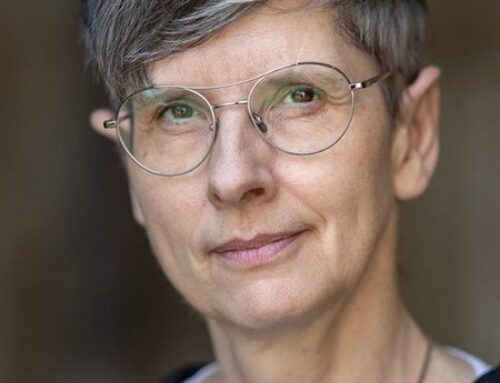
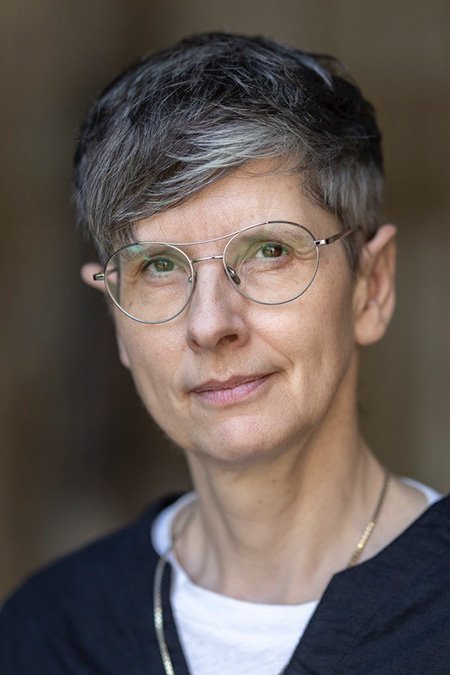
Anna Younes (she/her) is an independent researcher currently working on the cusp of Indigenous Studies, Settler Colonial and Black Studies in the Dutch Caribbean for KITLV. She has written her PhD (2015) on the institutionalisation of antisemitism accusations in Germany, tracing its genealogy back to the beginning of the War of Terror in Europe. Younes also works on contemporary issues of the counterinsurgent state, psychoanalysis and race, and education. In 2024, she won the Emma Goldman award for her contributions to social justice knowledge in Europe. For the past years she has left Europe and resides in Jordan.
Details Masterclass
Date & Time: Monday, November 16, 2026 from 14:00 to 17:00 hrs
Location: Utrecht University – room TBA
Organizer: Dr. Layal Ftouni (UU)
Registration: The masterclass is open to MA, RMA students and PhD candidates studying at a university in the Netherlands. Please send an email to nog@uu.nl, using the subject line ‘registration masterclass Younes’. For registration, we need your name, study programme, and the research school you’re affiliated with (this applies to RMA and PhD).
ECTS: 1 ECTS, only for PhD and RMA students