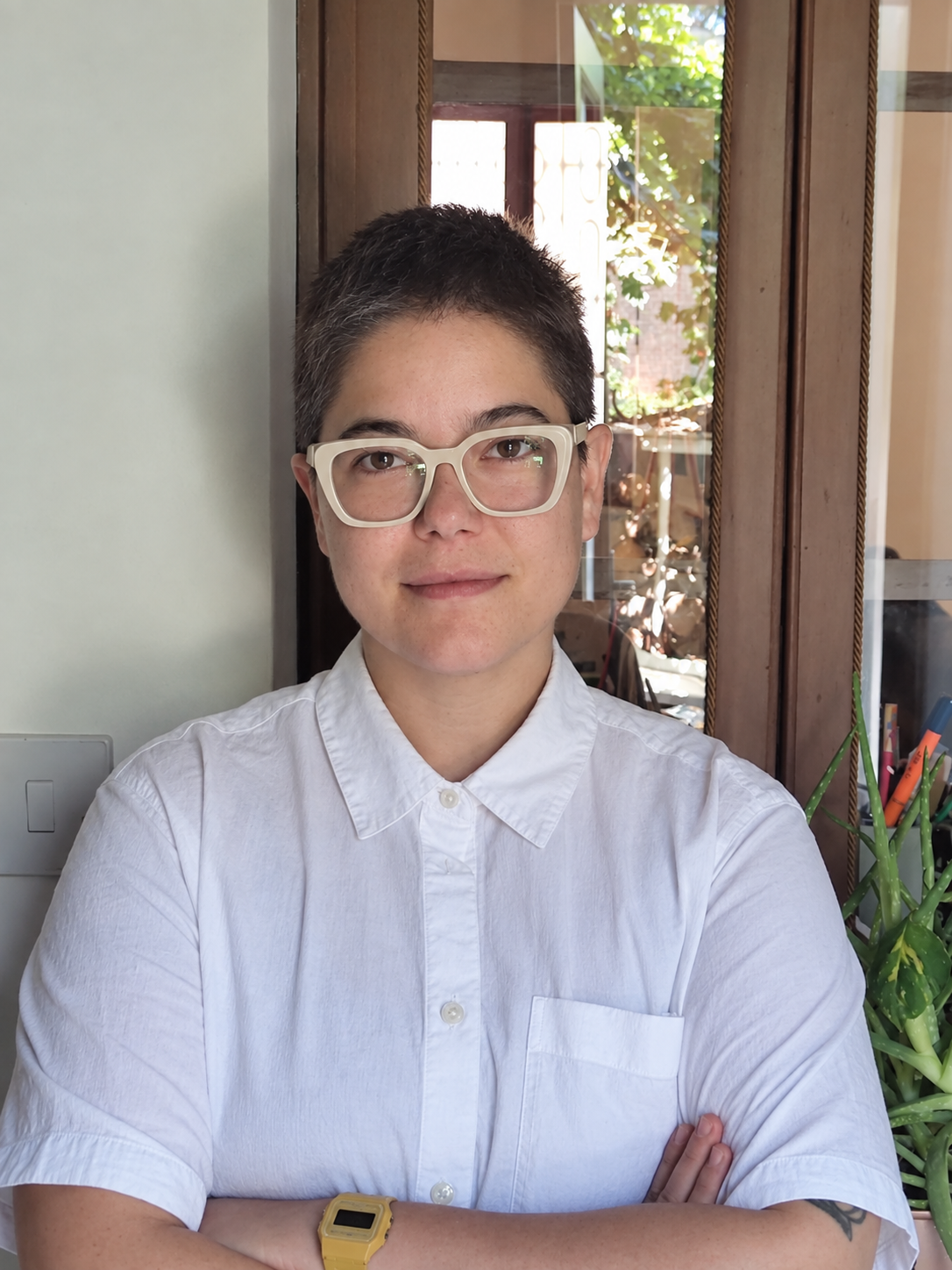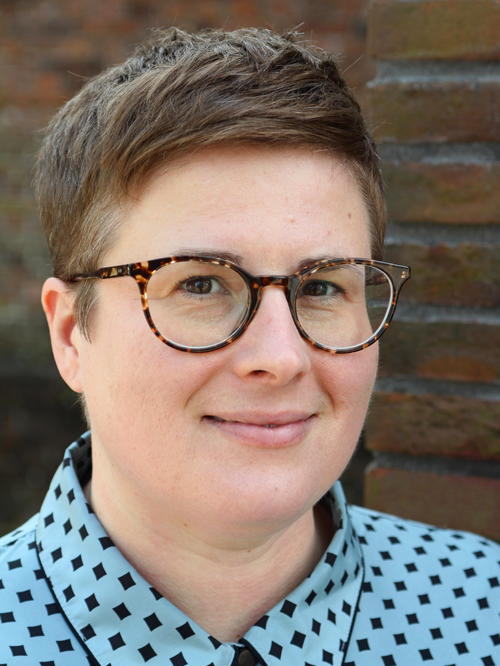

Masterclass with Dr. Giulia Sbaffi
Unreliable Archives: Malleability, Repetition, Withholding, and the Choreography of Action in Sex Work
June 10, 2026, 10:00-13:00h
Utrecht University
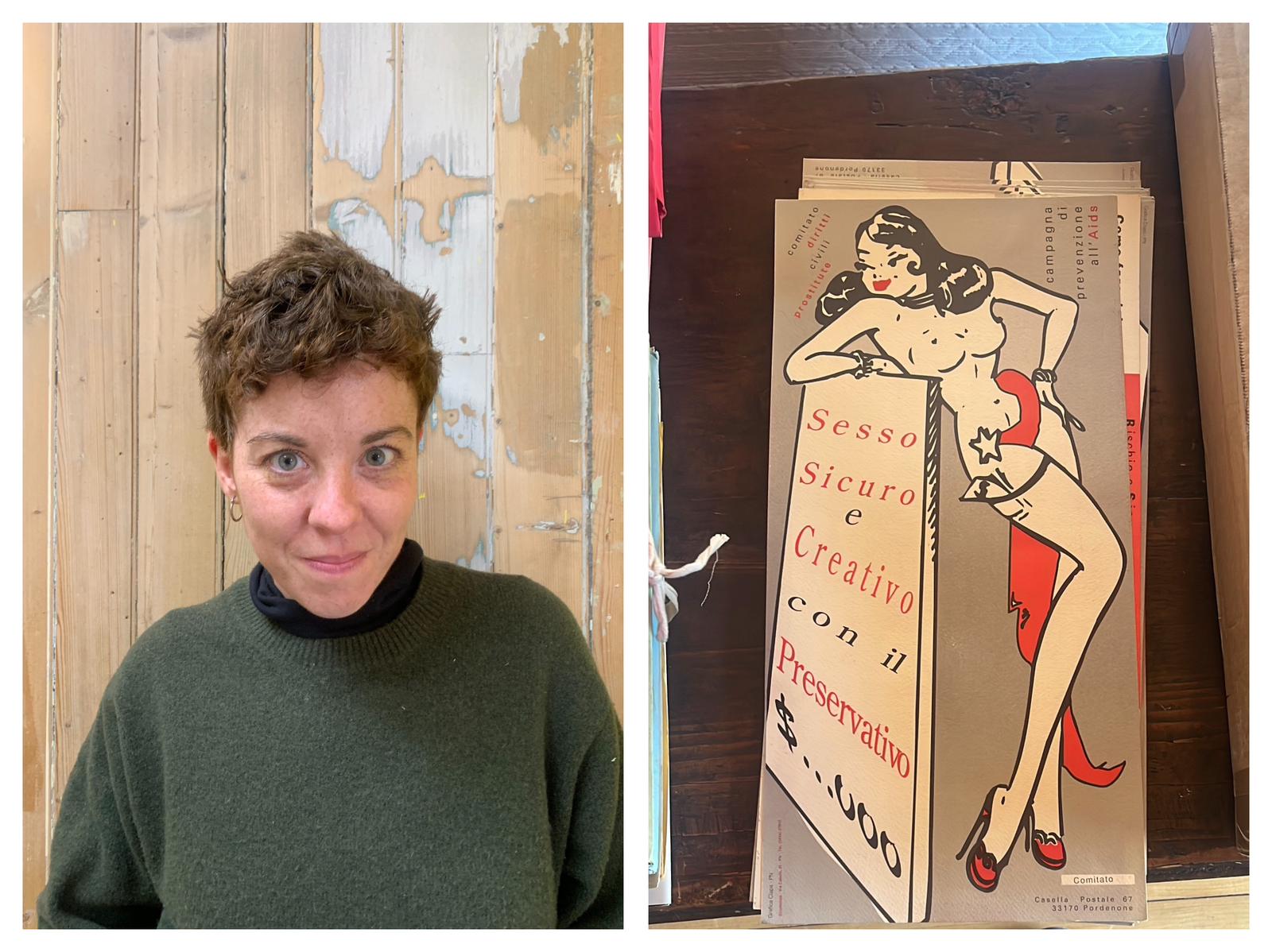 Paraphrasing Laurence Louppe, one might consider sex work as “the true avatar of Orpheus: one who has no right to turn back for fear of being denied the object of their search.” The “return” to which the dance historian refers, however, concerns choreographic experimentation that stages the physical and ephemeral act of the dancing gesture—an act that eludes the fixity of memory and time. If the analogy with the performative and ephemeral act of selling sexual services holds even within this description, the Orphic curse that I propose we examine in this masterclass instead evokes the structural impossibility—and, at times, the political refusal—of accessing that sedimentation of historical temporality which renders the human object reachable. This transition, both physical and epistemic, is not neutral; as Sara Ahmed argues, it is directive, oriented toward a specific structural way of perceiving objects, bodies, and meaning. In the case of sex work, this structure is deeply oppressive, stigmatizing, and exclusionary. Its historical traces are malleable, circulating opportunistically across police archives and other institutional repositories in ways that render the practice itself invisible while making hyper-visible the oppressive meanings attributed to it (e.g., illicit, immoral, illegal, dirty, irrelevant, defective, wrong, antifeminist, pathological).
In this masterclass, we will interrogate the meaning of these dynamics through the historical study of selected moments of agentive reactivation within sex work, as well as through analytical tools aimed at disarticulating the nomenclatures and taxonomies that phenomenologically structure the archive. Together, we will discuss withholding and self-censorship as practices of self-defense and as forms of archival abolition. At the same time, we will examine how archival dissemination and repetition can function as necessary—and often contradictory—strategies for building alliances and sustaining conflict, ultimately aimed at claiming space for collective political transformation and agency.
In preparation for the masterclass, participants are invited to:
- Bring an archival object (such as a reproduction of a photograph, a leaflet, a journal or magazine article, or other materials) which, in relation to their own research, they consider pertinent to the creation of a choreography of objects moving around sex work. This will allow us to collectively reflect on what other forms of archive might be imagined, starting from the practices of refusal and positioning outlined above.
- Do the following readings:
– Sara Ahmed. (2006). “The Orient and Other Others.” In Queer Phenomenology: Orientations, Objects, Others, 109-156. Durham: Duke University Press.
– Mikkel Bille, Frida Hastrup, and Tim F. Sørensen. (2010). “Introduction: An Anthropology of Absence.” In M. Bille et al. (eds.), An Anthropology of Absence: Materializations of Transcendence and Loss, 3-14. London: Springer.
– Julietta Singh. (2018). “No Archive Will Restore You.” In No Archive Will Restore You, 21-27. 3Ecologies Books. [Optional / recommended]
The masterclass is open to all RMA and PhD students studying at a university in the Netherlands who have an ongoing research project. It is particularly, though not exclusively, intended for students working directly with archives and/or with a research interest in sex work. By attending the masterclass, doing all the preparatory work, and presenting their research, participants can earn 1 credit (ECTS).
Details Masterclass
Date & Time: June 10, 2026, 10:00-13:00h
Location: Utrecht – Muntstraat 2A, Grote Zaal/Theatre
Contact Person: g.colpani@uu.nl and graziana.marziliano@uniupo.it
ECTS: 1 ECTS
Registration: To register, please contact Gianmaria Colpani (g.colpani@uu.nl) and Graziana Marziliano (graziana.marziliano@uniupo.it), indicating your current position (RMA or PhD student), university/institutional affiliation, Research School affiliation, and a brief overview of your motivation and your research interests/project. Registration deadline masterclass: June 5, 2026.