
NOISE Summer School 2026
Sites of Struggle and Contestation:
Social Reproduction Theory
Netherlands Research School of Gender Studies
24 – 28 August 2026, Utrecht University, The Netherlands.
- In what ways does the reproduction of human life—biological, social, cultural, and affective—function as a precondition for capitalist accumulation?
- How can we theorize exhaustion, burnout, attachment, care, love, and vulnerability as integral to capitalist exploitation rather than as external or secondary effects?
- How do austerity, welfare retrenchment, privatization, and neoliberal governance intensify pressures on households, communities, and care infrastructures?
- How are global care chains, migrant labor regimes, border controls, and global inequalities central to contemporary forms of social reproduction?
- What forms of resistance, refusal, collective organizing, and political imagination emerge from within sites of care, domestic work, and community building?
This year’s NOISE summer school is dedicated to Social Reproduction Theory (SRT). SRT is a theoretical framework that has developed through an ongoing dialogue among Marxist and feminist theories and social movements. Building on 1970s feminist activism centered on the “Wages for Housework” campaign, SRT brings to light the unseen aspects of the capitalist economy that underpin the reproduction of the labor force.
It challenges the social invisibility and economic undervaluation of essential activities like child-rearing, caring for the elderly, housework, and community building. SRT thus argues that understanding capitalism requires recognizing the blurred boundaries and interconnections between productive and reproductive work, and that the creation of goods, services, and life itself is part of an integrated process (Bhattacharya 2017; Ferguson 2017).
During the summer school, we will explore the multifaceted concept of social reproduction (SR). We will examine how SR extends beyond its traditional view as a structural-economic process of labor reproduction to encompass the daily and long-term renewal of humanity. Drawing on decolonial, postcolonial, and Black feminist scholarship, we will analyze SR as an embodied, affective, and subjective domain, shaped by the racialized, cisgendered, and colonial histories embedded in workers’ bodies and emotions (Mohanty 2003, Parreñas 2017, Durin 2020, Morgan and Weinbaum 2024).
Building on this foundation, the summer school will highlight how Social Reproduction Theory (SRT) critically links capitalist production with intersecting systems of oppression such as gender, race, and colonialism, including transfeminist perspectives that expose how capitalist regimes privilege cisnormative, heterosexual, able-bodied, racialized life forms, while precariously positioning trans lives or rendering them surplus (Laufenberg 2025, Gore 2024).
We will also analyze how colonial regimes govern social reproduction to sustain and reshape life-and-death conditions, addressing how these regimes radically and harmfully restructure the very conditions under which life or death are sustained, as the case of Palestine makes particularly visible (Bhattacharya and Ferguson 2025).
This edition of the NOISE Summer School also engages with the transnational reorganization of labor. We will analyze how capitalism externalizes reproductive costs, shifting burdens onto marginalized communities, especially working-class women of color and migrant workers (Gago 2014, 2020).
The program will cover concepts like the international division of reproductive labor and global care chains, highlighting how care work is reorganized across borders in response to demographic changes, welfare cuts, and racialized and gendered labor markets in the Global North (Parreñas 2000, 2001).
Participants will also learn how labor regimes and migration policies function as mechanisms to organize and regulate social reproduction through formal and informal labor, visa procedures, temporary work permits, family reunification restrictions, and kinship and community obligations (Farris 2015, 2017; Mezzadri 2016, 2017).
Join us this edition to explore social reproduction as a dynamic terrain of political resistance and collective agency. This program highlights initiatives like the feminist strike (8M), which exemplifies social reproduction theory in action through women’s assemblies, migrant and popular economies, and movements focused on queer-trans-feminist, anti-racist, and anti-colonialist struggles.
The themes addressed through the 5-day program will be:
- Social Reproduction Theory: Genealogies, concepts, and contemporary debates
- Social reproduction and migration, and transnational labor regimes
- Queer and trans perspectives in Social Reproduction Theory
- Social reproduction, race, and coloniality
- Social Reproduction in the Netherlands: dialogues across research and practice
Aims – Summer School participants will collectively:
- Understand the key concepts and genealogies of Social Reproduction Theory and situate them within contemporary feminist, Marxist, and antiracist scholarly debates.
- Examine social reproduction as a constitutive terrain of capitalist social relations through which racialized, gendered, colonial, and cisnormative hierarchies are produced and contested.
- Analyze how transnational arrangements of migration and labor regimes organize differentiated forms of exploitation and discipline, and how they unevenly redistribute the costs of social reproduction.
- Engage with lived experiences of struggle and contestation to critically assess and reimagine social reproduction in alternative, non-exploitative, and non-extractive forms, in order to challenge and denaturalize its dominant structures.
Target audience
This advanced training course offers a diverse yet coherent program of study from an interdisciplinary perspective. The Summer School is meant for current PhD and (R)MA students. Separate seminars for these two groups will be provided in the afternoons.
Formula
- Lectures in the morning
- Separate PhD and (R)MA-seminars in the afternoon
- Plenary sessions
- Social program
- Students prepare before NOISE by reading and collecting material for assignments (approximately 40 hours of work). After the school has ended, participants who fulfill all requirements (assignment preparation and reading, active participation, and the final essay) receive a NOISE Certificate of 5 EC.
- All students are required to participate in the full five-day program.
Venue
The NOISE Summer School 2026 will be hosted by Utrecht University, the Netherlands.
Tuition Fees
The tuition fee is €500,-. If you are selected as a tutor, you are eligible for a reduced fee (you can indicate your interest for a tutor position on the application form). The tuition fees includes digital reading materials but excludes accommodation and subsistence costs (i.e., food, meals, drinks, etc.).
Unfortunately, the NOG cannot offer financial aid for the Summer School. We advise students in need of financial aid to contact their local institutions.
Teachers in the course
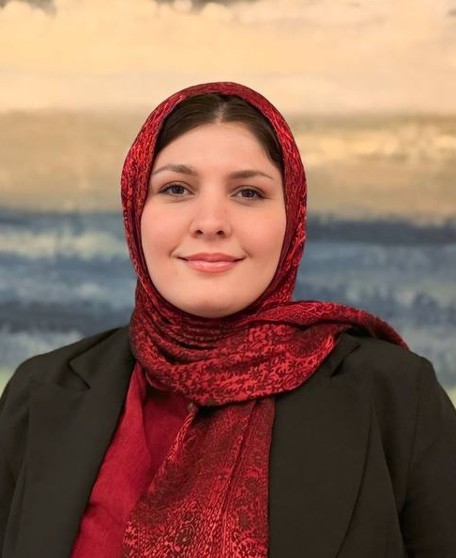
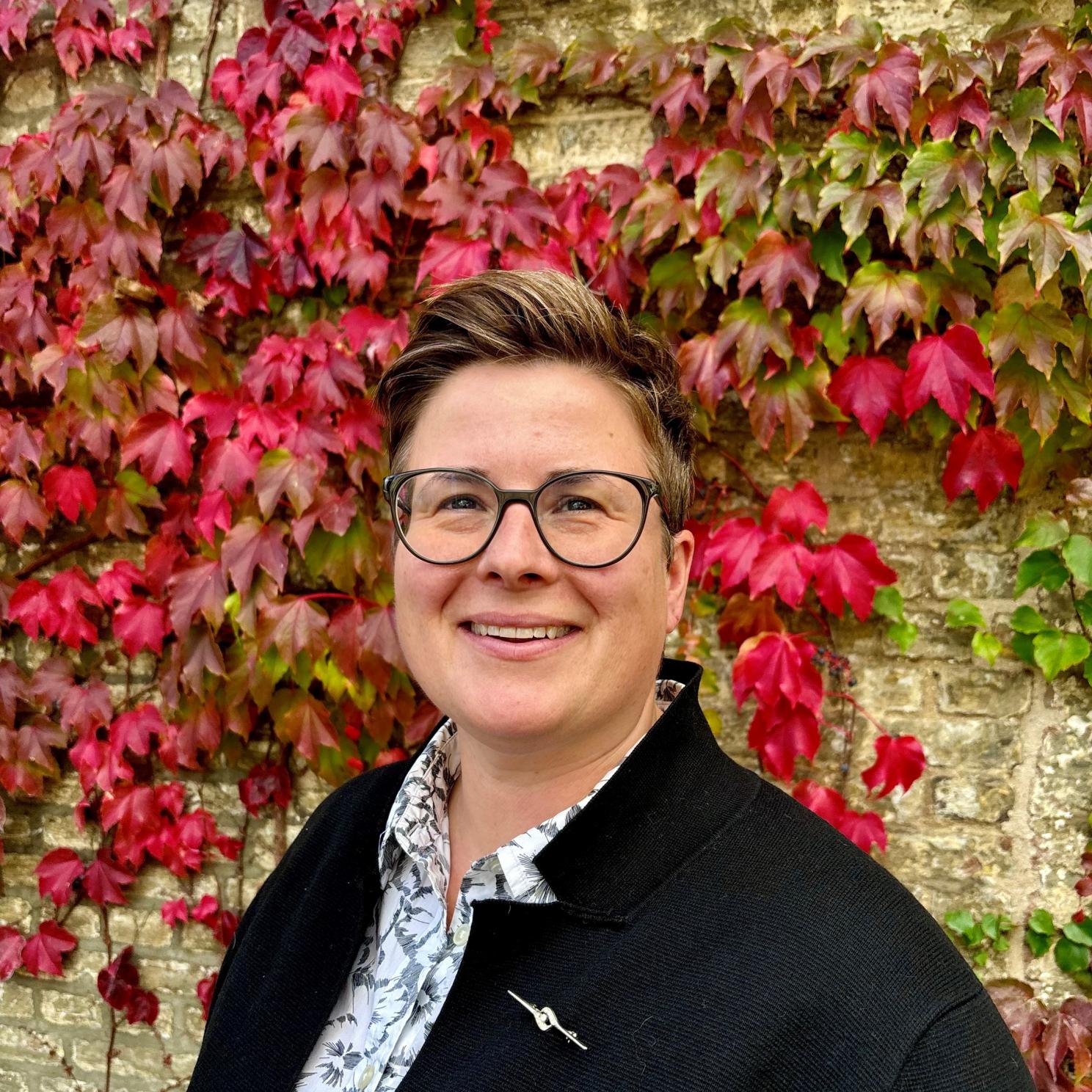
The NOISE Summer School is organized by the Netherlands Research School of Gender Studies (NOG, Utrecht University). The 2026 edition is coordinated by Dr. Ana Maria Miranda Mora and Dr. Laura Candidatu (both Utrecht University, NL). The director of NOISE is Prof. dr. Kathrin Thiele (Utrecht University, NL).
Numerous distinguished international scholars and activists specializing in Marxist, trans-queer-feminist, anti-racist, postcolonial, and decolonial studies will instruct at the Summer School.
Confirmed scholars lecturing at the summer school are: Sara R. Farris (Goldsmiths, University of London), Rhacel Salazar Parreñas (Princeton University), Mike Laufenberg (Fulda University of Applied Sciences), Ellie Gore (University of Manchester), Susan Ferguson (University of Houston/York University Toronto) and Alessandra Mezzadri (SOAS, University of London).
Registration and Deadline:
Deadline: April 30, 2026.
Please download the NOISE 2026 Application form and send it to: noise@uu.nl
For more information, please email: noise@uu.nl